Culinary Creations for EveryoneDetailed Nutrition Info for T1D
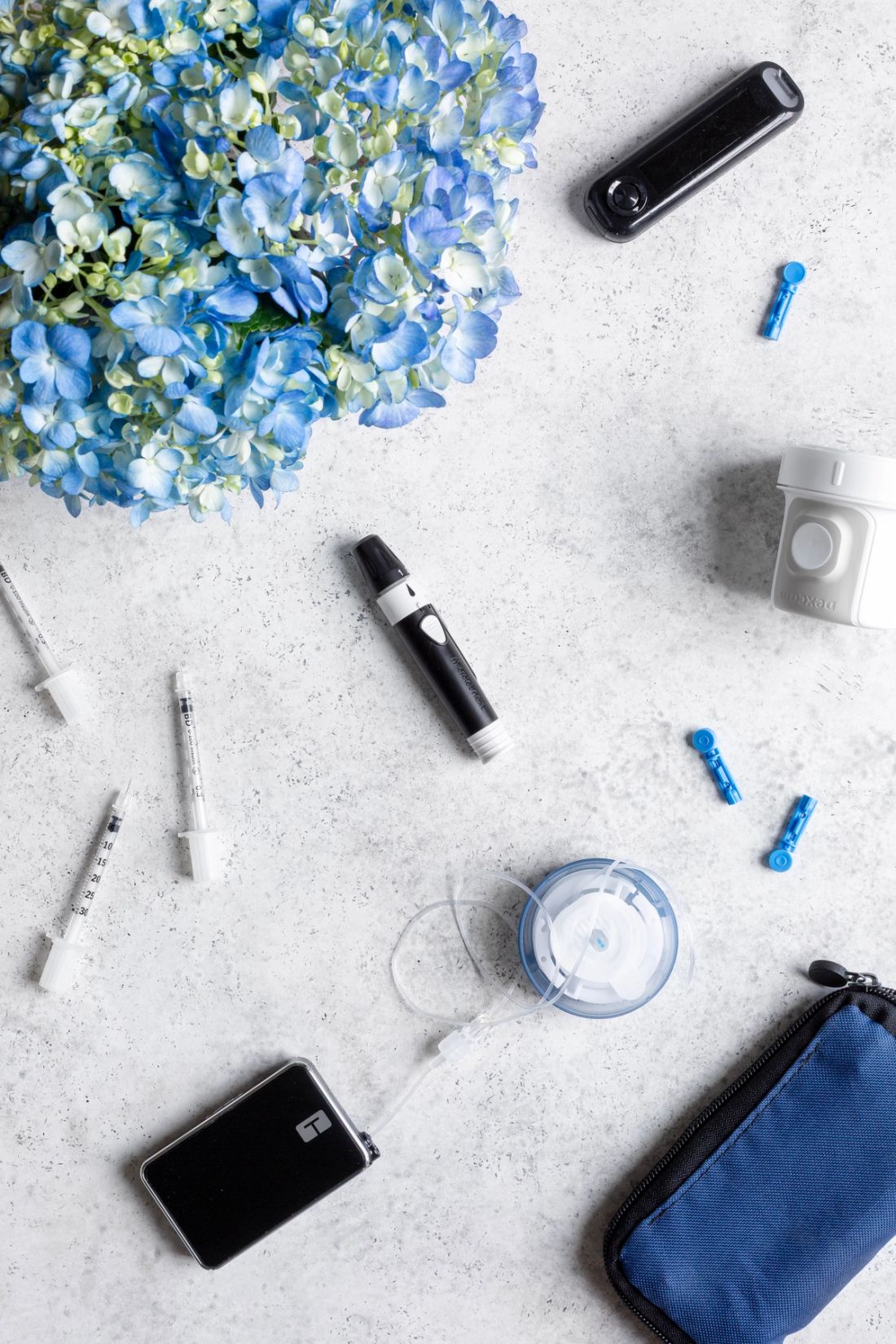
Type 1 Diabetes Supplies: an insulin pump, syringes, glucose test meter, kit, lancets, lancing device, and some blue flowers.

Type 1 Diabetes · 1 of 23

Pin it

What is T1D?

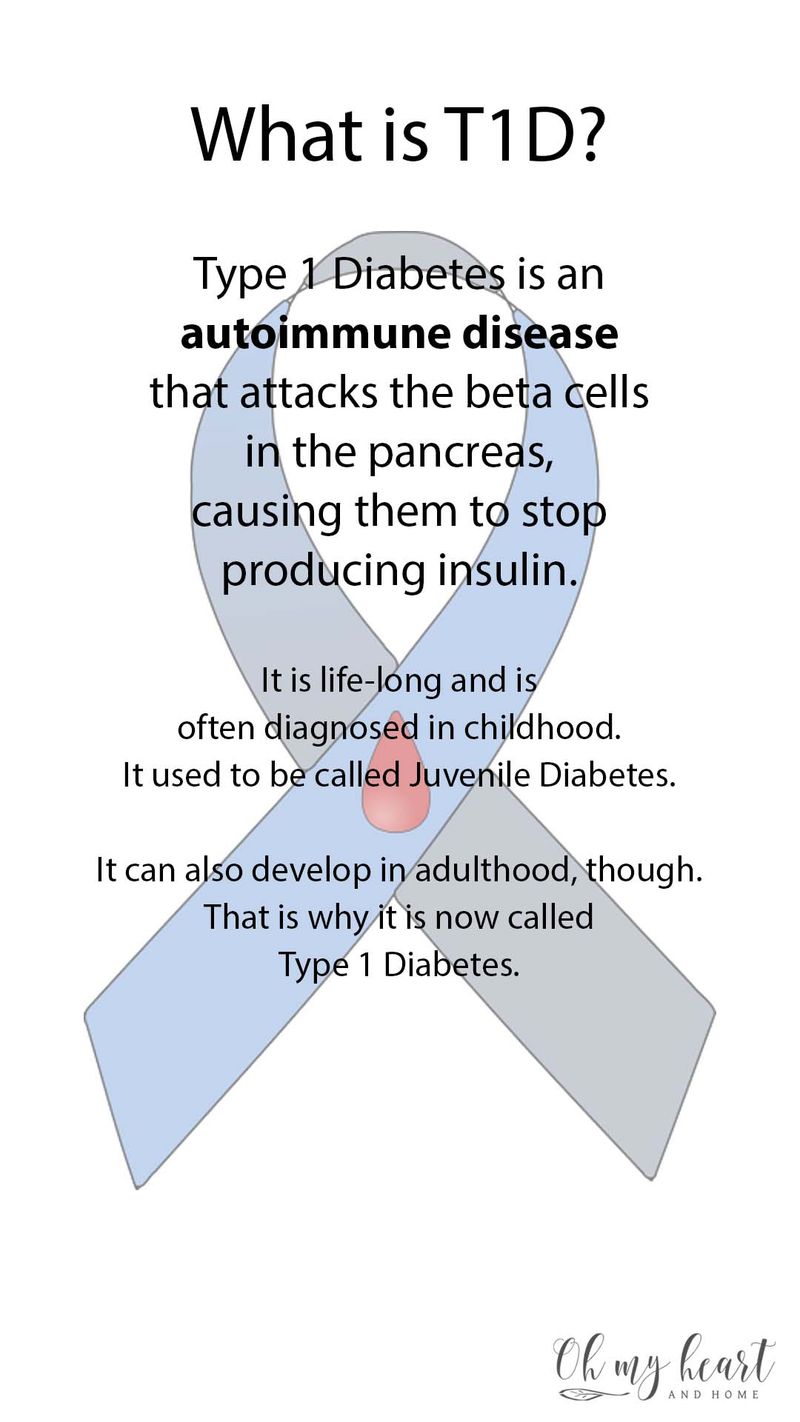
T1D, or Type 1 Diabetes, is an autoimmune disease that attacks the beta cells in the pancreas, causing them to stop producing insulin.

It is life-long and is often diagnosed in childhood. It used to be called Juvenile Diabetes.

It can also develop in adulthood. That is why it is now called Type 1 Diabetes.

What is Insulin?

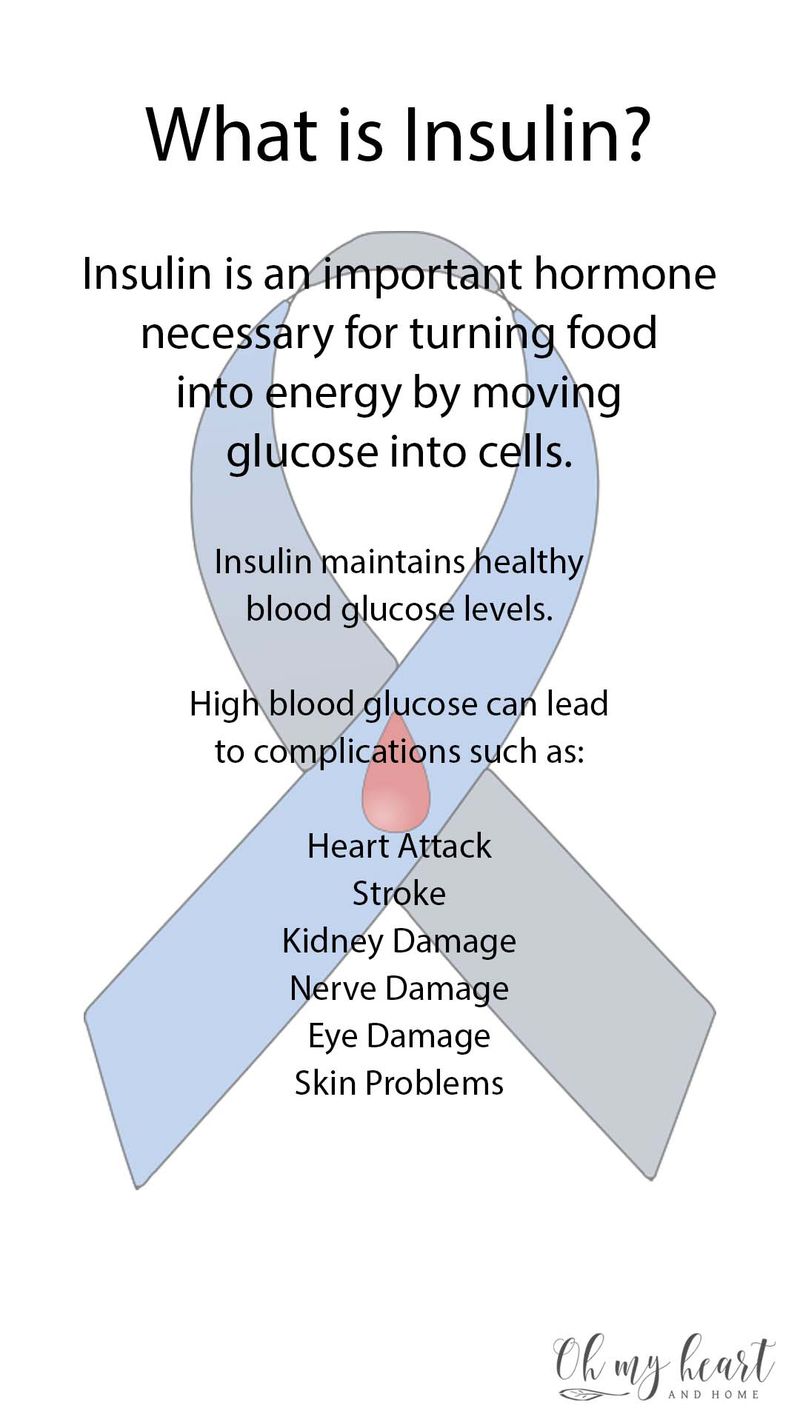
Insulin is an important hormone necessary for turning food into energy by moving glucose into cells.

Insulin maintains healthy blood glucose levels.

High blood glucose can lead to complications such as:

  • Heart Attack
  • Stroke
  • Kidney Damage
  • Nerve Damage
  • Eye Damage
  • Skin Problems
  • DKA

What happens when a person with Type 1 Diabetes does not have Insulin?

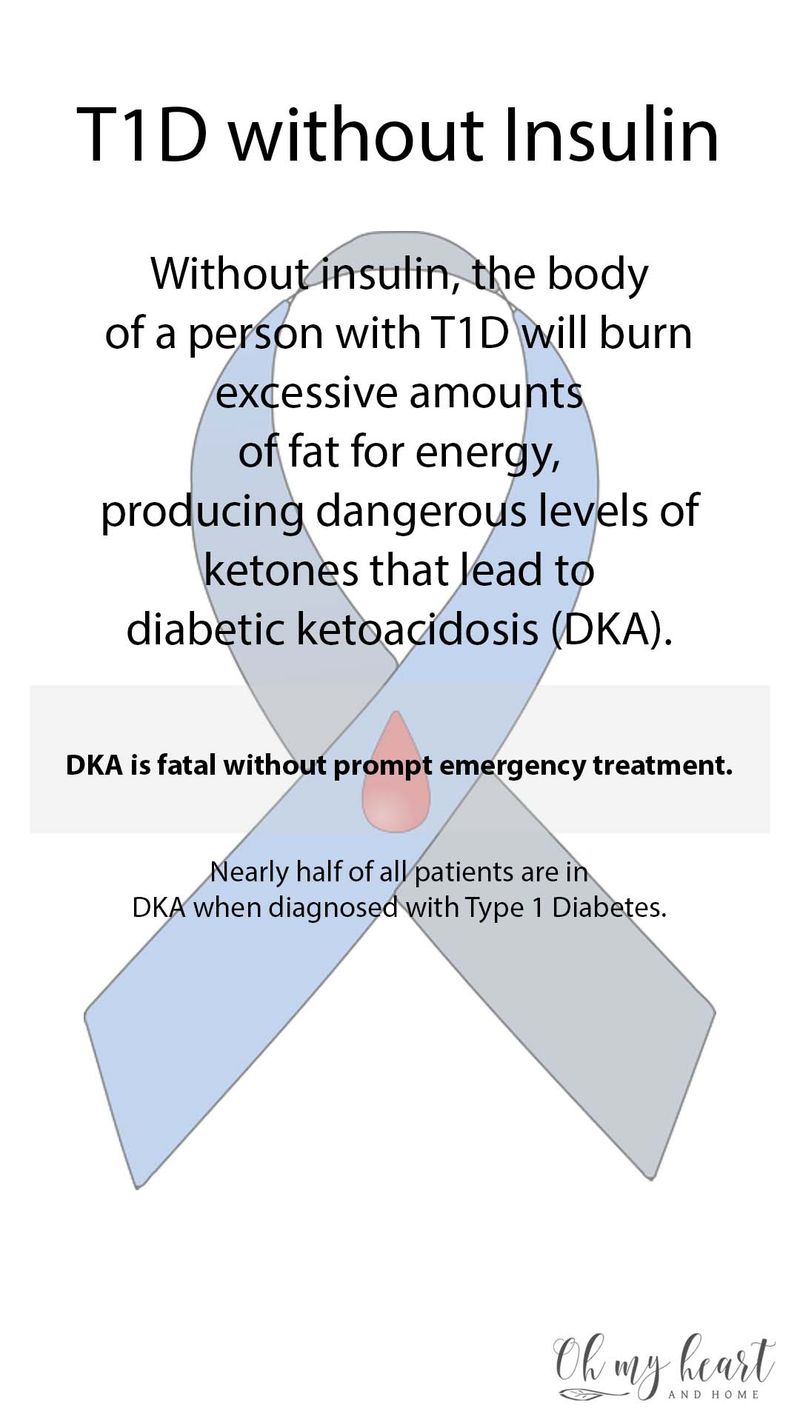
Without insulin, the body of a person with T1D will burn excessive amounts of fat for energy, producing dangerous levels of ketones that lead to diabetic ketoacidosis, also known as DKA.

DKA is fatal without prompt emergency medical treatment.

of all patients are in DKA when diagnosed with Type 1 Diabetes.

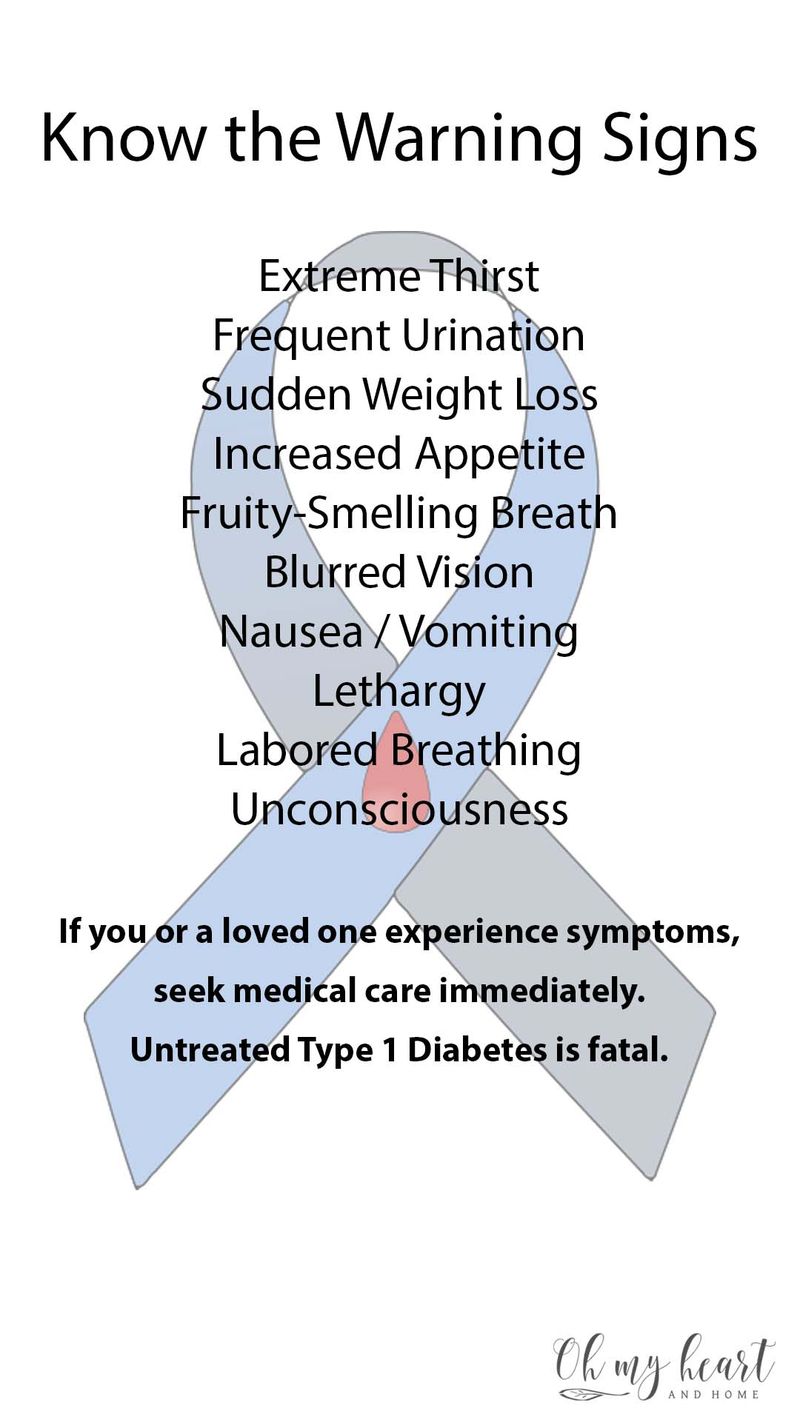
Know the Warning Signs

  • Extreme Thirst
  • Frequent Urination
  • Sudden Weight Loss
  • Increased Appetite
  • Fruity-Smelling Breath
  • Blurred Vision
  • Nausea / Vomiting
  • Lethargy
  • Labored Breathing
  • Unconsciousness

If you or a loved one experience symptoms, seek emergency medical care immediately. Untreated Type 1 Diabetes is fatal.

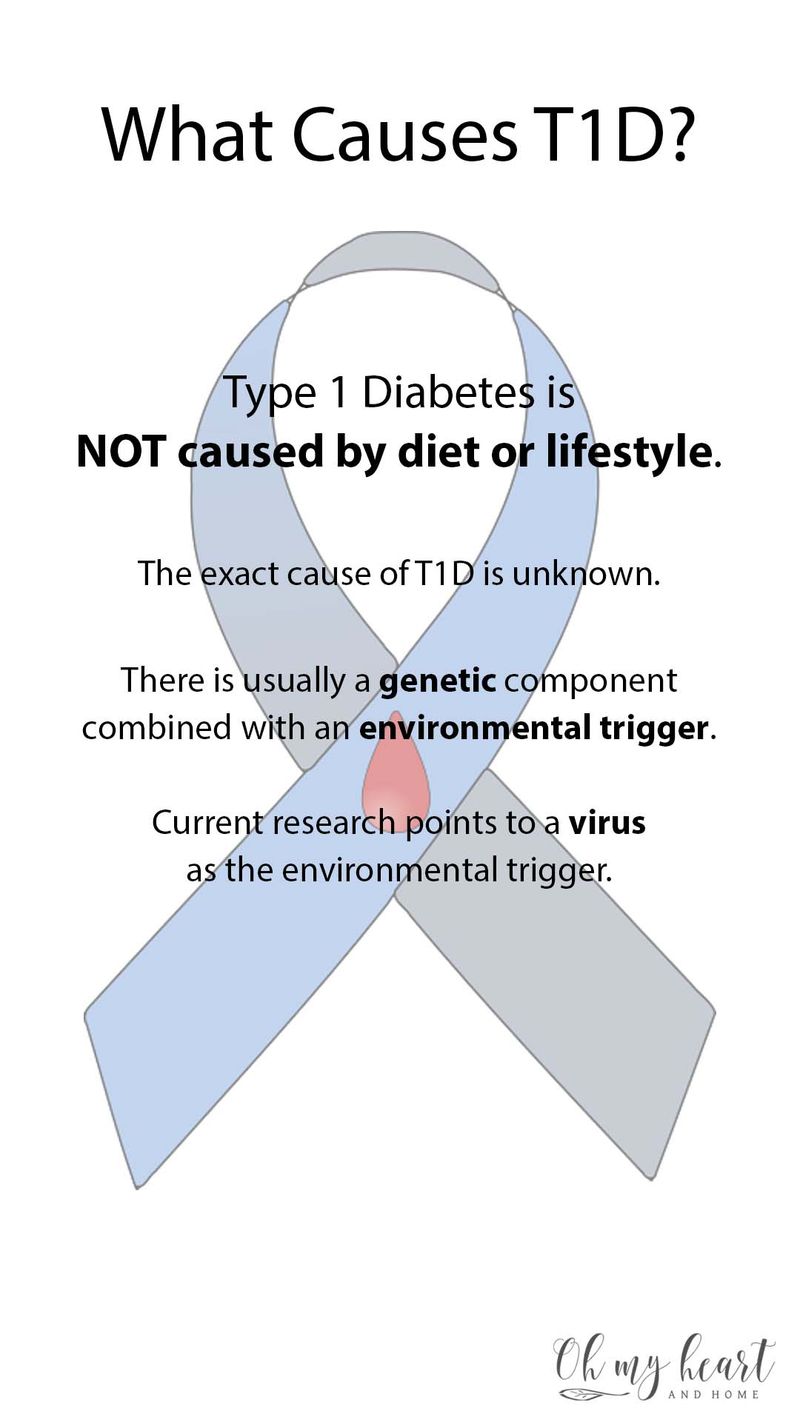
What Causes T1D

Type 1 Diabetes is NOT caused by diet or lifestyle.

The exact cause of T1D is unknown.

There is usually a genetic component combined with an environmental trigger.

Current research points to a virus as the environmental trigger.

Prevention

There is currently no way to prevent Type 1 Diabetes.

Researchers are trying to find a way to prevent it.

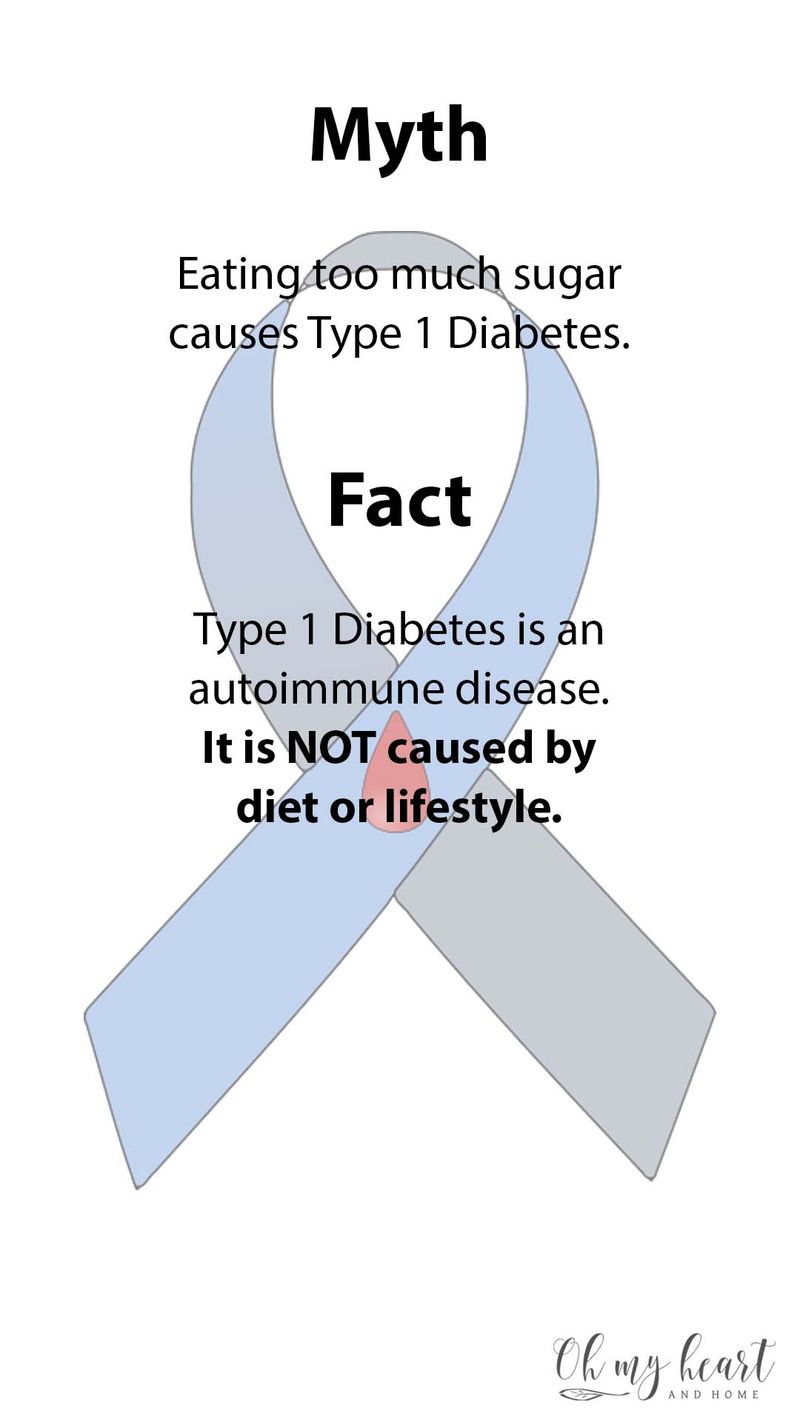
Myth

Myth

Eating too much sugar causes Type 1 Diabetes.

Fact

Type 1 Diabetes is an autoimmune disease.

It is NOT caused by diet or lifestyle.

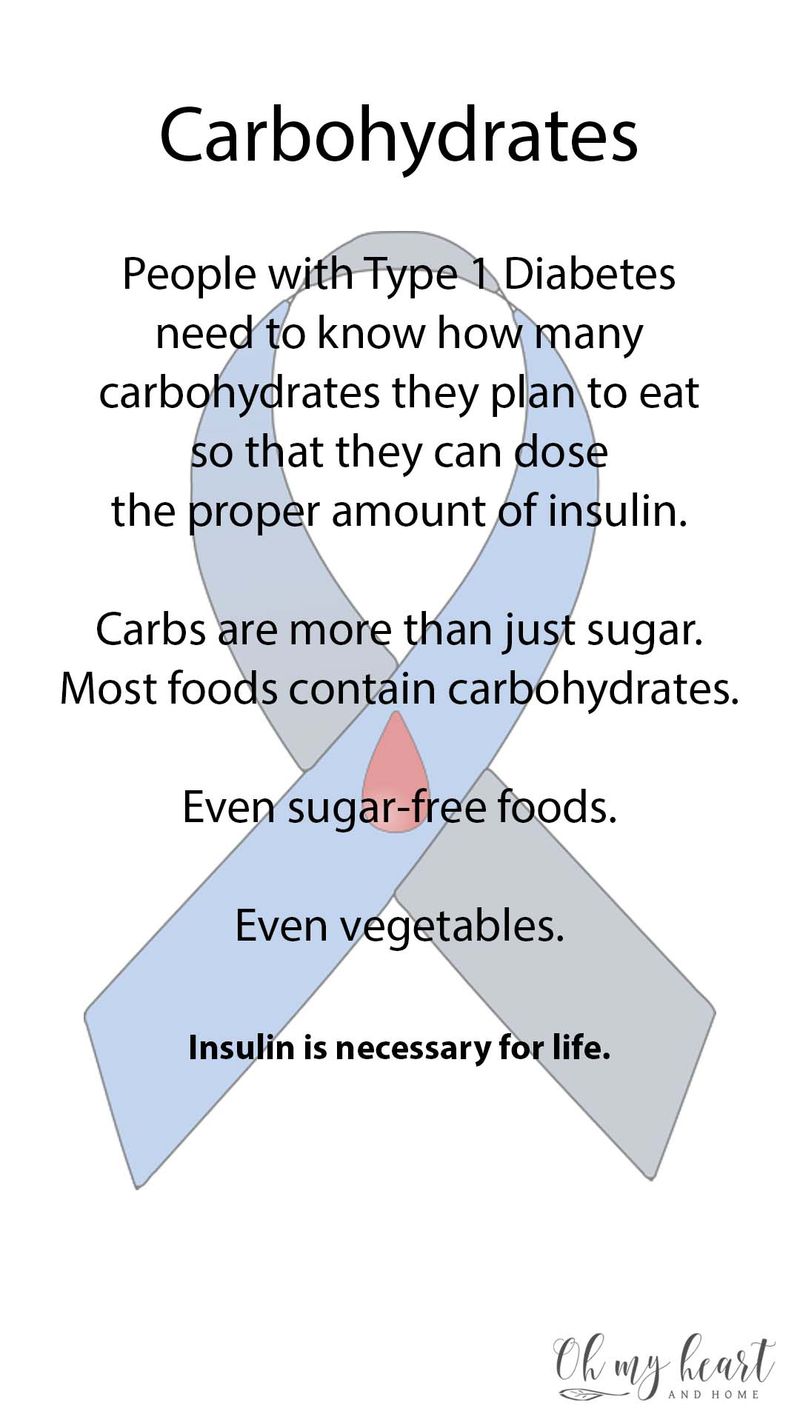
Carbohydrates

People with Type 1 Diabetes need to know how many carbohydrates they plan to eat so that they can dose the proper amount of insulin.

Carbs include more than just sugar. Most foods contain carbohydrates.

Even sugar-free foods.

Even vegetables.

Insulin is necessary for life.

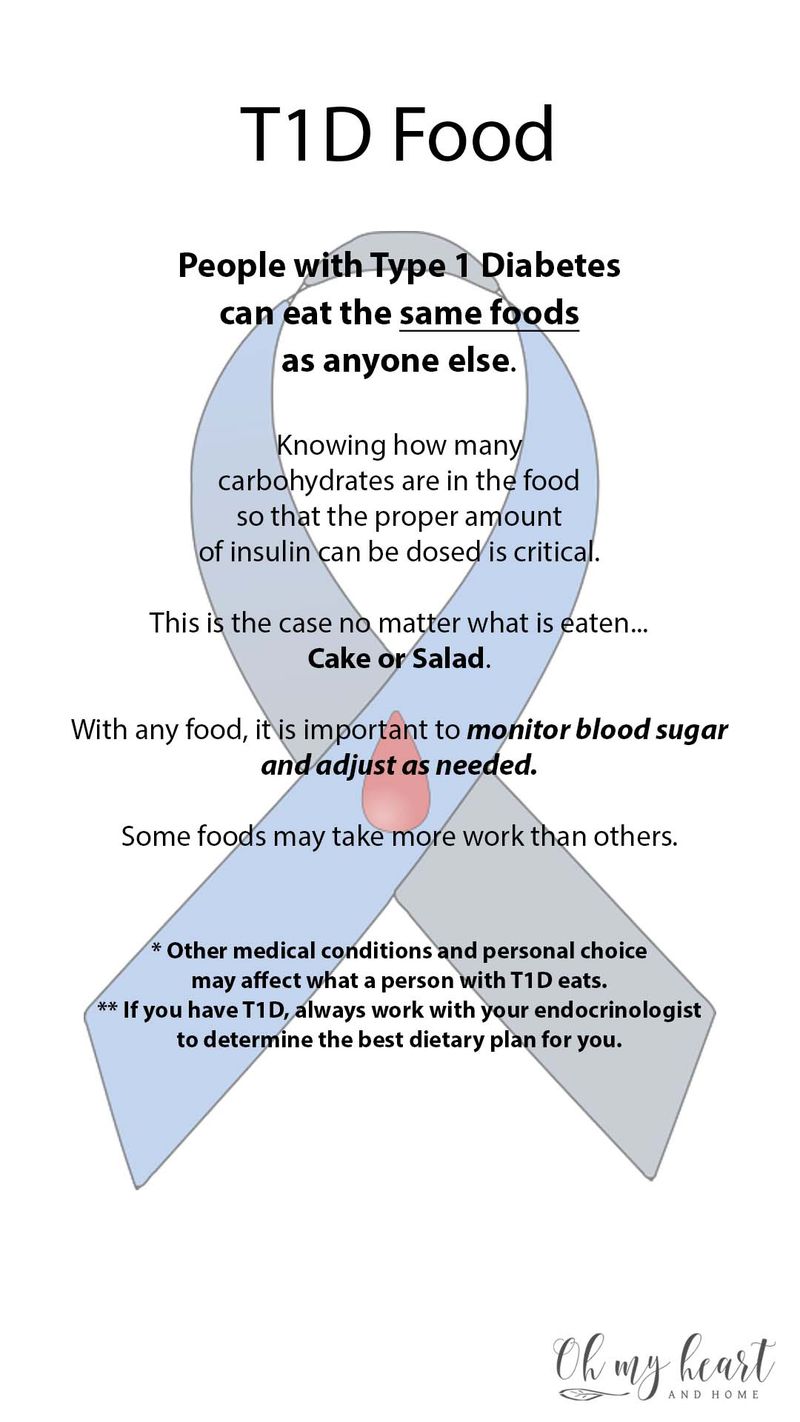
T1D Food

People with Type 1 Diabetes can eat the same foods as anyone else.

Knowing how many carbohydrates are in the food so that the proper amount of insulin can be dosed is critical.

This is the case no matter what is eaten... Cake or Salad.

With any food, it is important to monitor blood sugar and adjust as needed.

Some foods may take more work to maintain safe blood sugar levels than others. Modern technologies help make this possible.

Our nutrition calculator is designed by a T1D mom to help calculate carbohydrates. Tell it exactly how many grams of a recipe are being served, and it will calculate the full nutrition profile for that amount.

* Other medical conditions and personal choice may affect what a person with T1D eats.

** If you have T1D, always work with your endocrinologist to determine the best dietary plan for you.

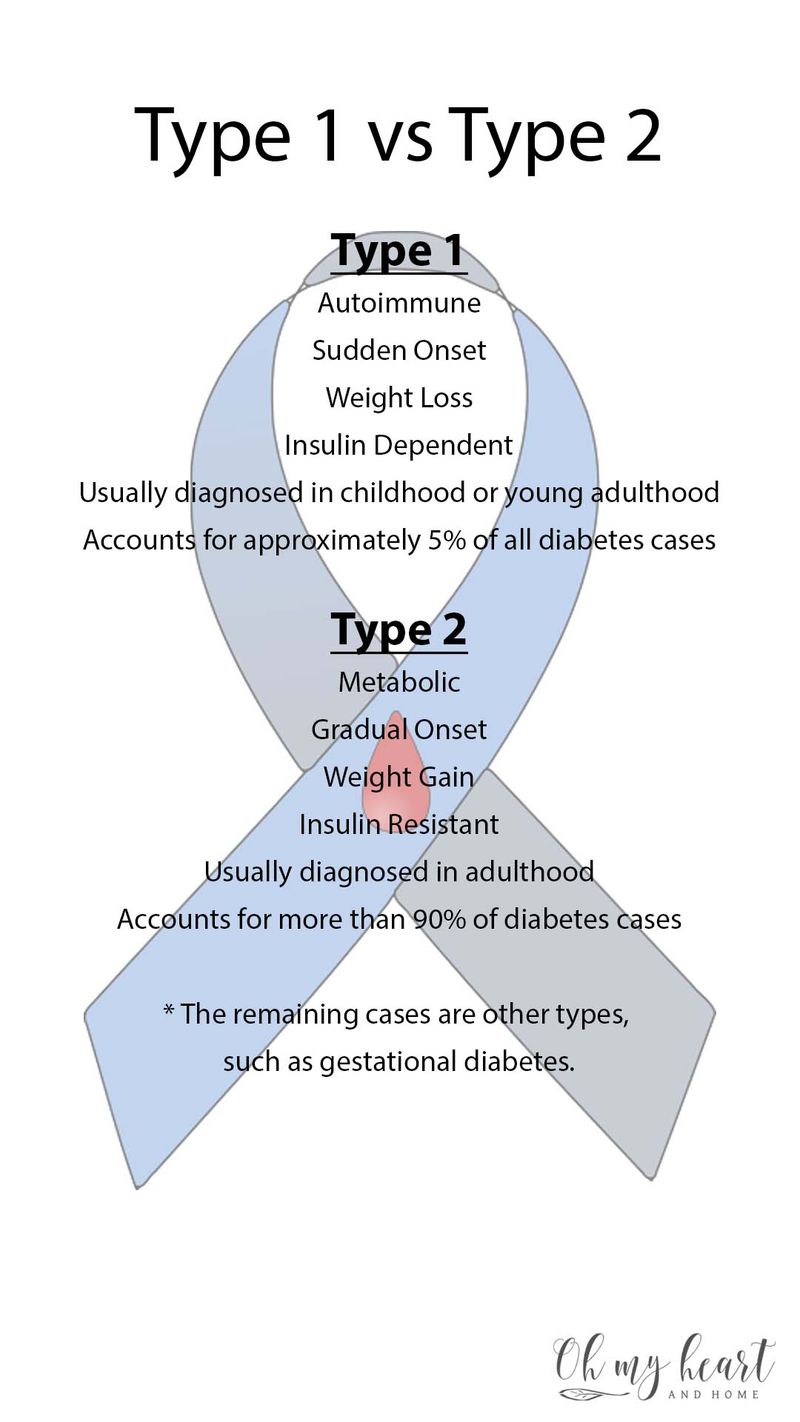
Type 1 vs Type 2

Type 1Type 2
AutoimmuneMetabolic
Sudden OnsetGradual Onset
Weight LossWeight Gain
Insulin DependentInsulin Resistant
Usually diagnosed in childhood or young adulthoodUsually diagnosed in adulthood
Accounts for approximately 5% of all diabetes casesAccounts for more than 90% of diabetes cases*

* The remaining cases are other types, such as gestational diabetes.

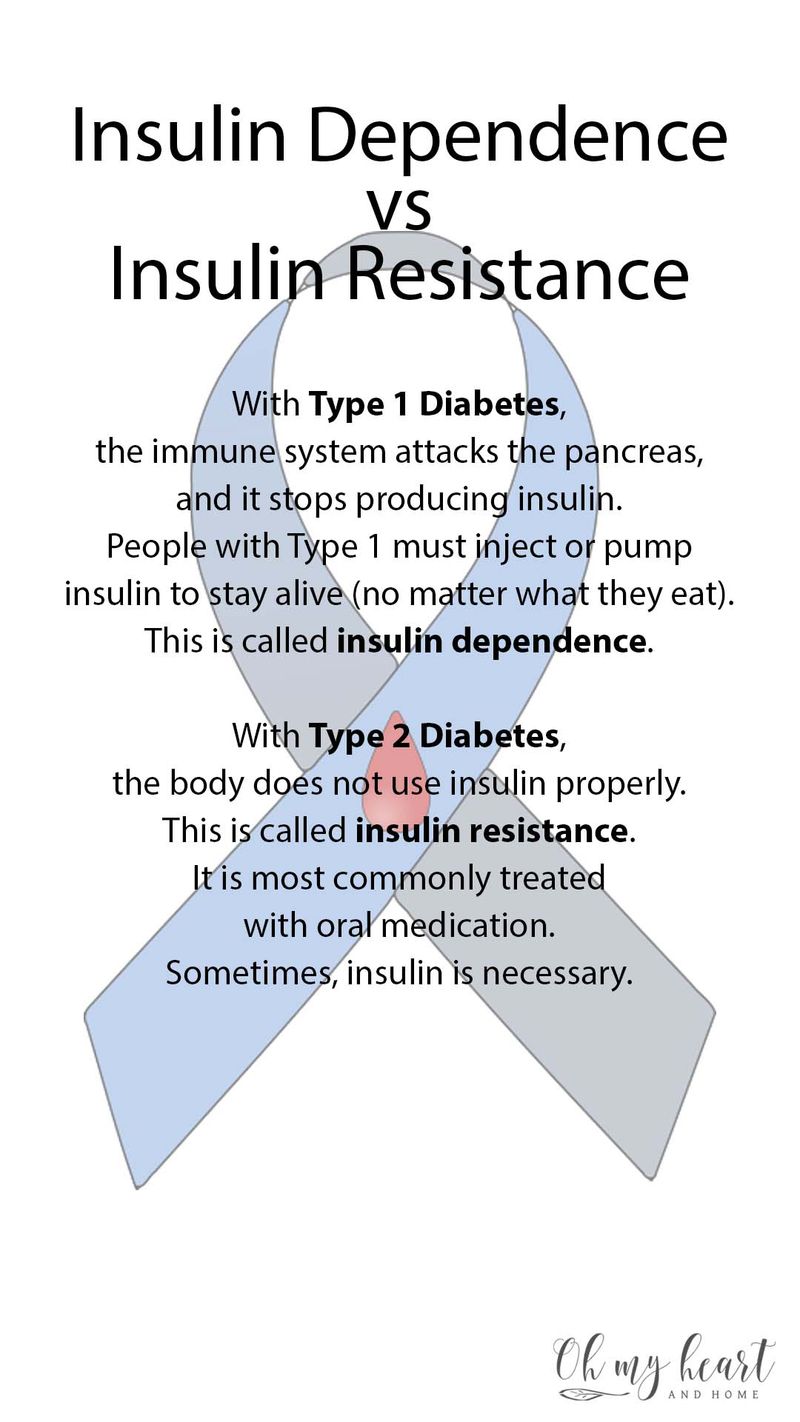
Insulin Dependence vs Insulin Resistance

Insulin Dependence

With Type 1 Diabetes, the immune system attacks the pancreas, and it stops producing insulin. People with Type 1 must inject or pump insulin to stay alive, no matter what they eat. This is called insulin dependence.

Insulin Resistance

With Type 2 Diabetes, the body does not use insulin properly. This is called insulin resistance. It is most commonly treated with oral medication. Sometimes, insulin is necessary.

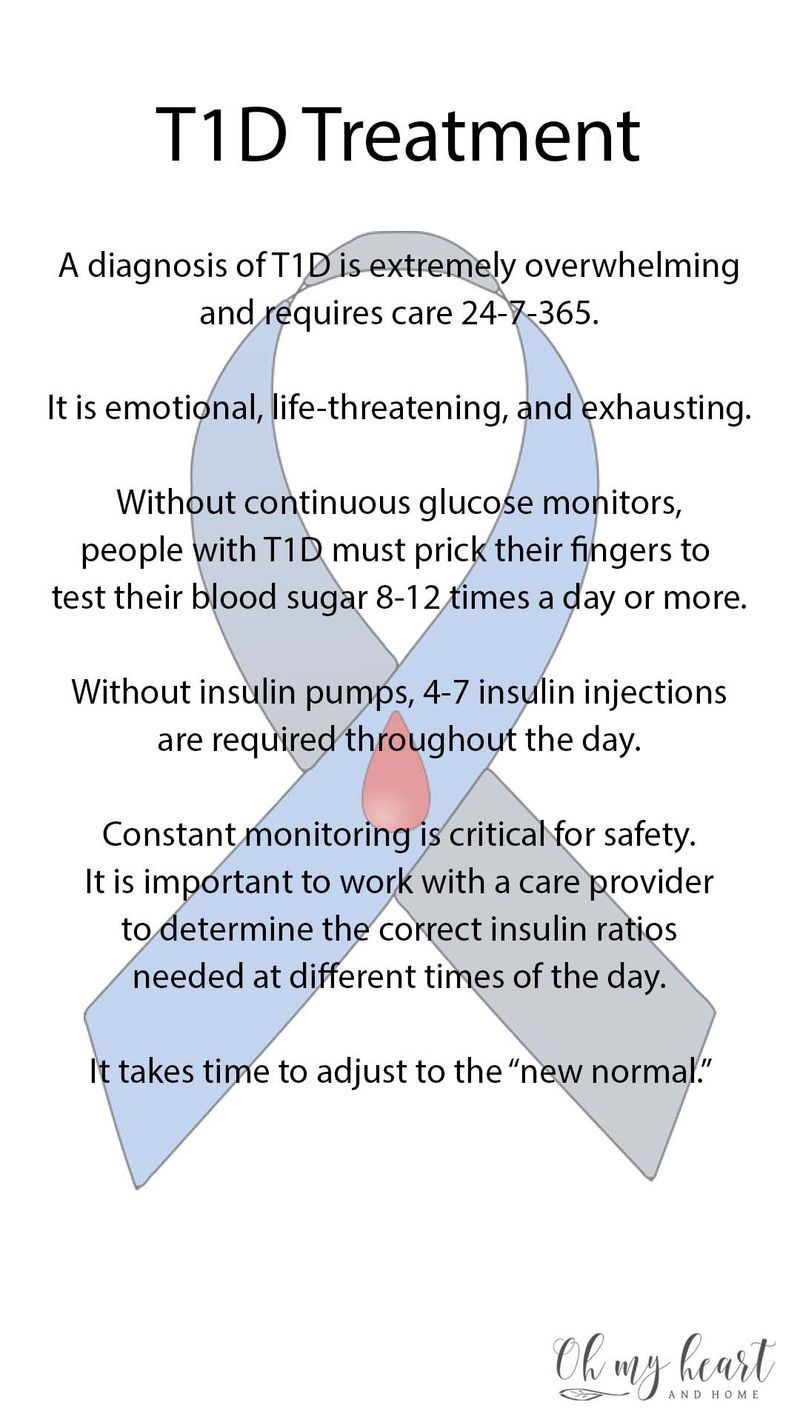
T1D Treatment

A diagnosis of T1D is extremely overwhelming and requires care 24-7-365.

Maintaining safe blood sugar levels is critical, as levels too high or too low can be incredibly dangerous.

It is emotional, exhausting, and life-threatening.

People with T1D must either use a continuous glucose monitor or prick their fingers to test their blood sugar 8-12 times per day or more.

They must have insulin, delivered either through an insulin pump or injected through a syringe 4-7 times per day.

Constant monitoring is critical for safety. It is important to work with a medical care provider to determine the correct insulin ratios needed at different times of the day.

It takes time to adjust to the diagnosis.

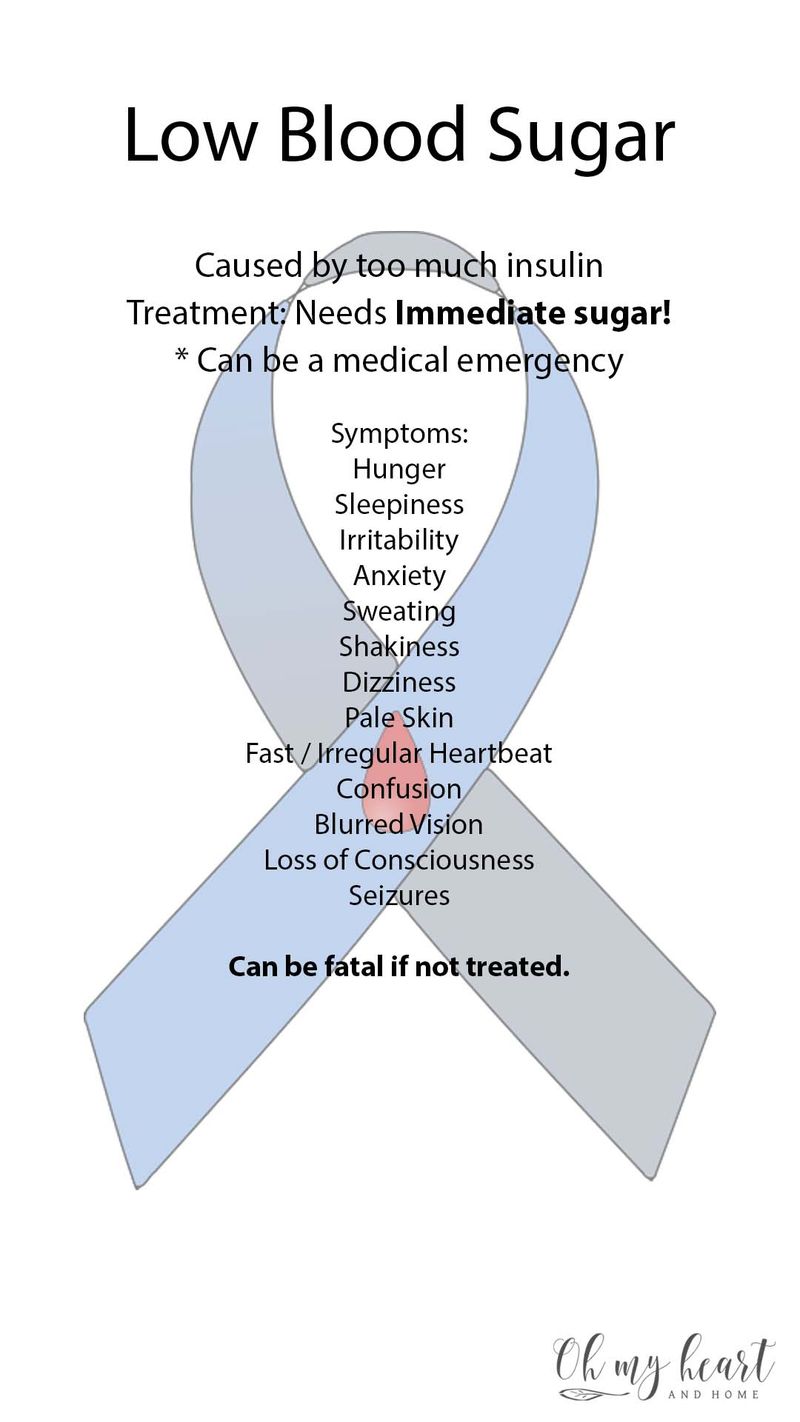
Low Blood Sugar

Low blood sugar is caused by too much insulin.

It is a medical emergency!

Treatment

Needs Immediate Sugar!

Symptoms:

  • Hunger
  • Sleepiness
  • Irritability
  • Anxiety
  • Sweating
  • Shakiness
  • Dizziness
  • Pale Skin
  • Fast / Irregular Heartbeat
  • Confusion
  • Blurred Vision
  • Loss of Consciousness
  • Seizures

Severe low blood sugar resulting in seizure or loss of consciousness requires 911 and emergency glucagon. Can be fatal if not treated immediately.

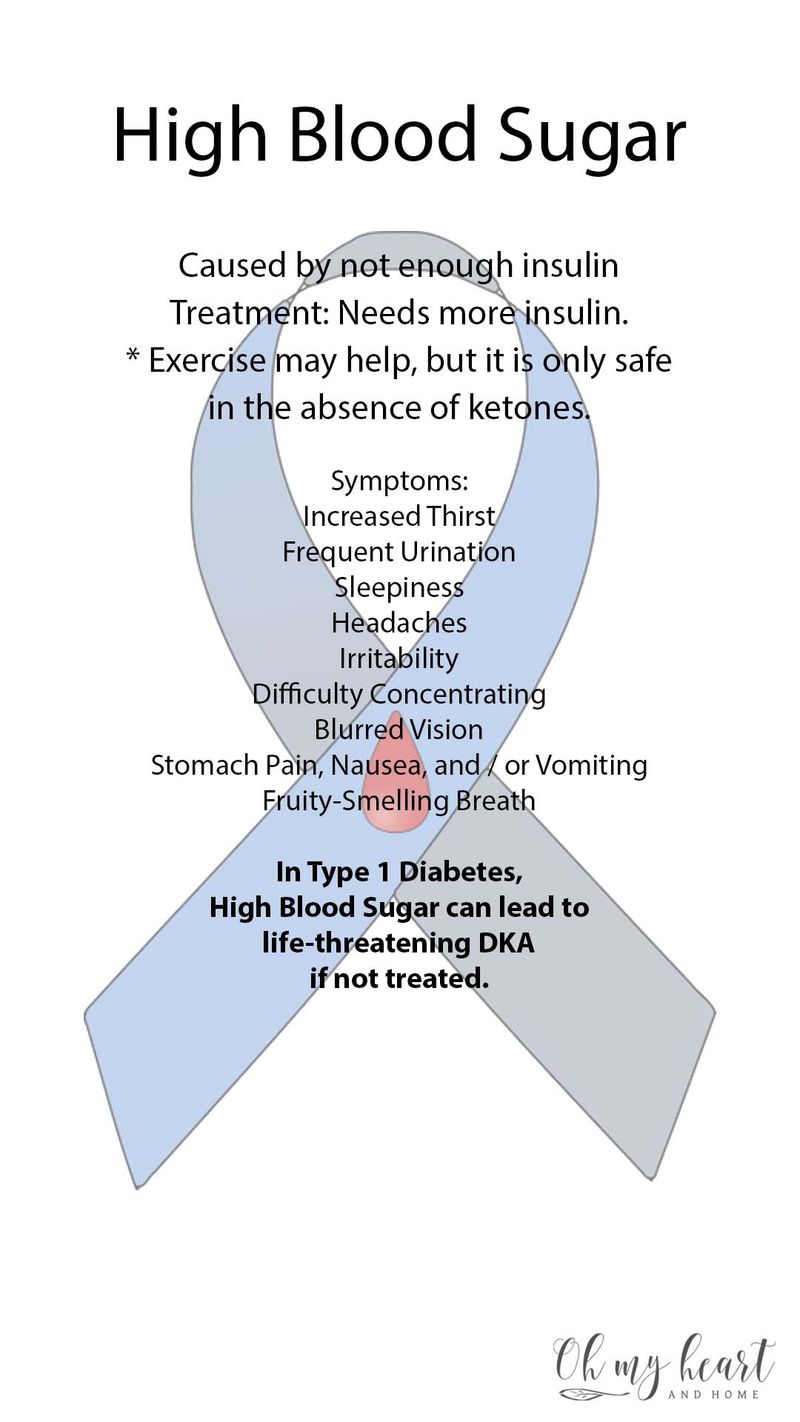
High Blood Sugar

High blood sugar is caused by not having enough insulin.

Treatment

More insulin, as directed by the care team’s plan

* Exercise may help, but it is only safe in the absence of ketones.

Symptoms:

  • Increased Thirst
  • Frequent Urination
  • Sleepiness
  • Headaches
  • Irritability
  • Difficulty Concentrating
  • Blurred Vision
  • Stomach Pain, Nausea, and/or Vomiting
  • Fruity-Smelling Breath

In Type 1 Diabetes, High Blood Sugar can lead to life-threatening DKA if not promptly treated.

Myth

Myth

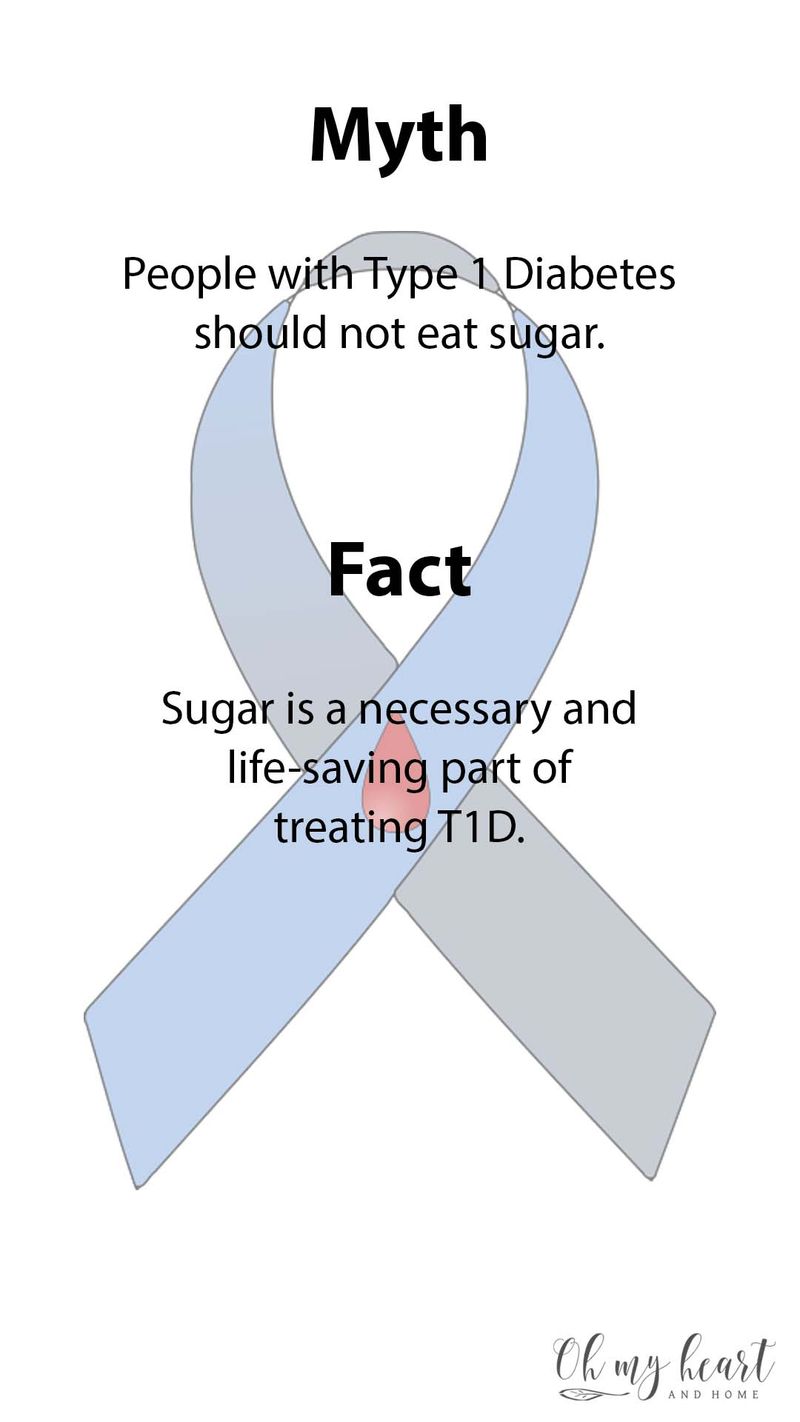
People with Type 1 Diabetes should not eat sugar.

Fact

Sugar is a necessary and life-saving part of treating T1D.

“Why Can’t You Get Your Diabetes Under Control?”

With Type 1 Diabetes, it is not possible to “get it under control.”

There are 42 factors that affect blood sugar, and only a few of those factors are somewhat controllable.

People with T1D have to perform the job of the beta cells in the pancreas.

While a pancreas is designed to work on a cellular level, there is only so much one can do to perform the same job.

Highs and Lows are a part of T1D life, and it will always take effort.

T1D Cure

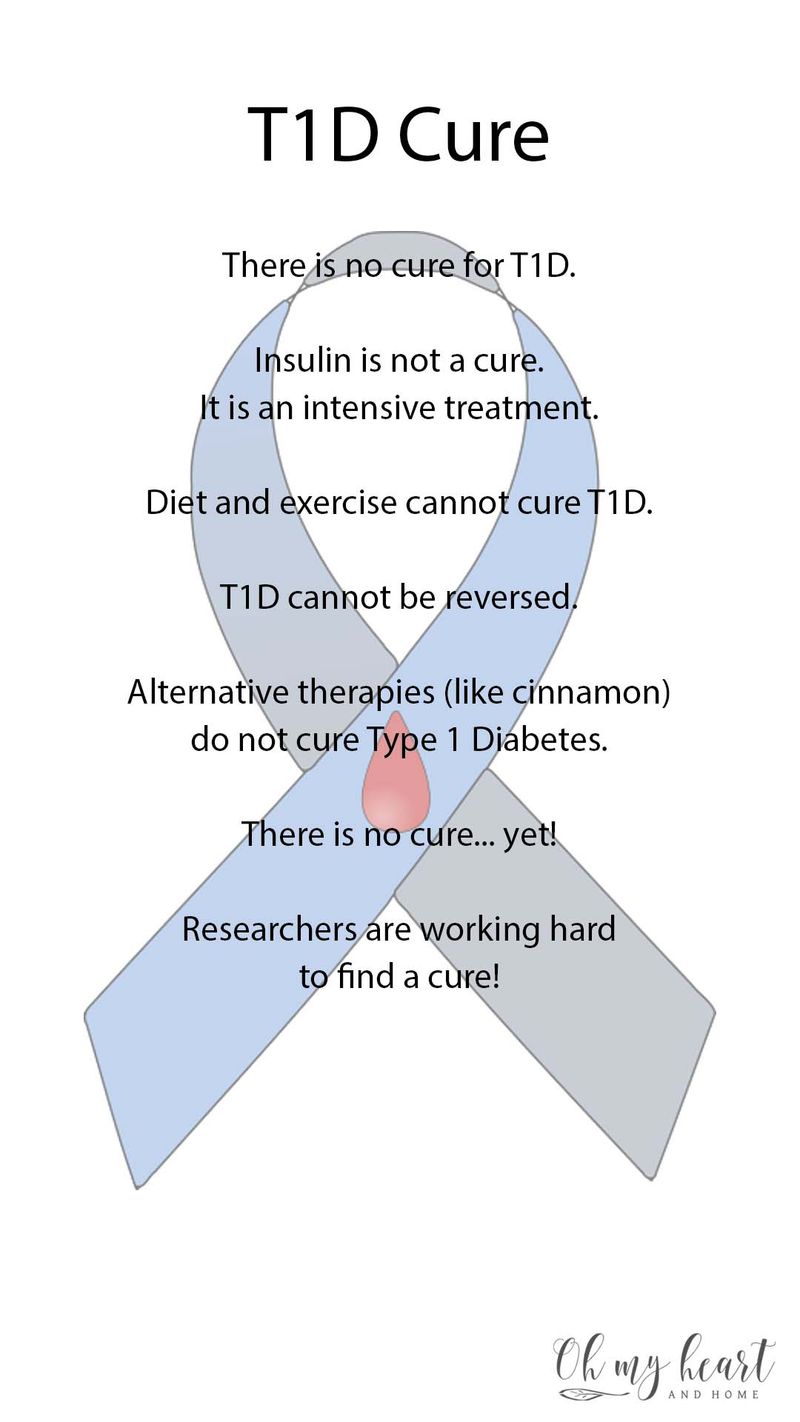
There is no cure for T1D

  • Insulin is not a cure. It is an intensive treatment.
  • Diet and exercise cannot cure T1D.
  • T1D cannot be reversed.
  • Alternative therapies, like cinnamon, do not cure Type 1 Diabetes.

There is no cure... yet!

Researchers are working hard to find a cure!

Insulin Costs

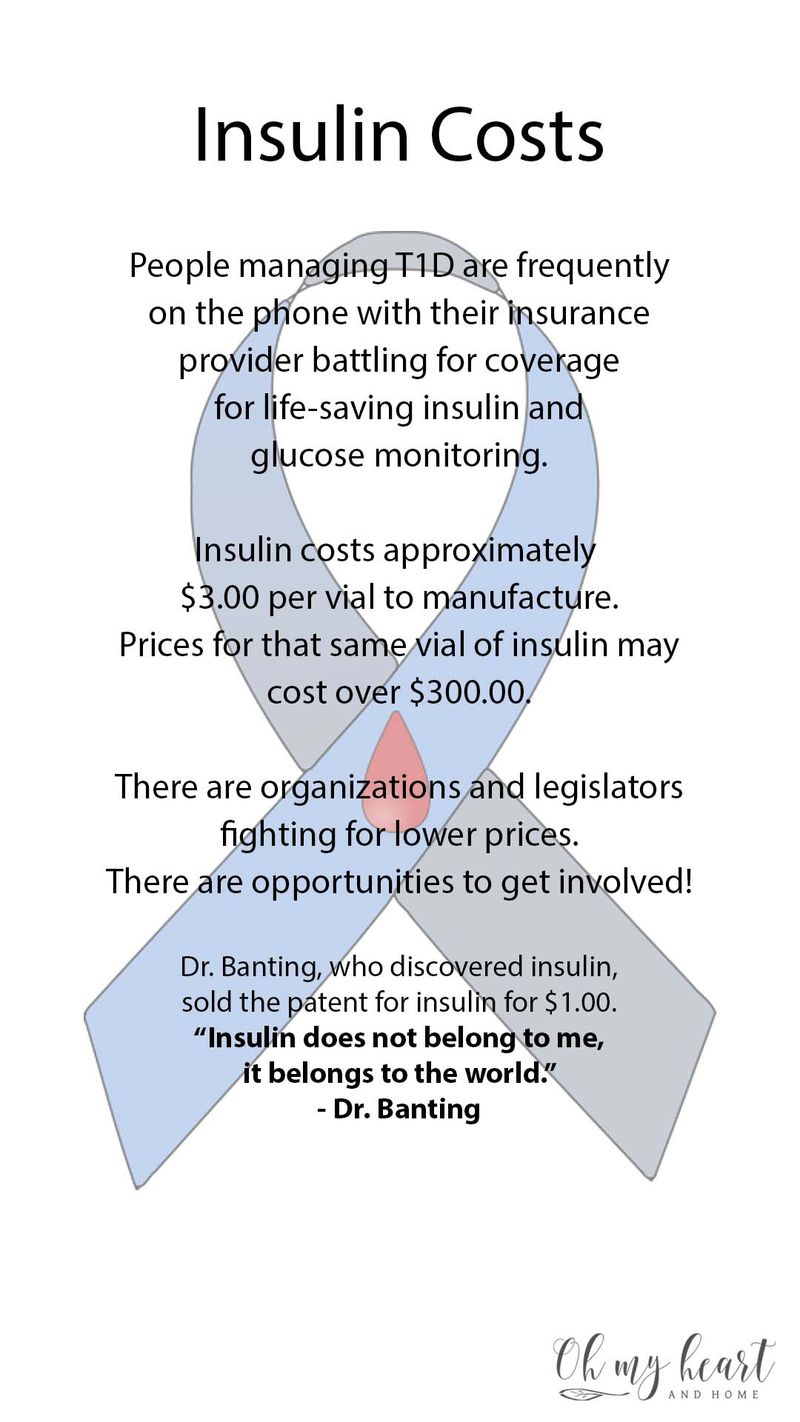
People managing T1D are frequently on the phone with their insurance provider battling for coverage for life-saving insulin and glucose monitoring.

Insulin costs approximately $3.00 per vial to manufacture.

Prices for that same vial of insulin may cost over $300.00.

There are organizations and legislators fighting for lower prices.

There are opportunities to get involved! Organizations We Support

Dr. Banting, who discovered insulin, sold the patent for insulin for $1.00.

Insulin does not belong to me, it belongs to the world.

Dr. Banting

Misconceptions

There is a misconception that Type 1 Diabetes is caused by lifestyle choices.

This idea is inaccurate and dangerous.

Type 1 Diabetes cannot be prevented. It can strike anyone.

Any diet.

Any lifestyle.

Any age.

What NOT to Say to Someone with T1D

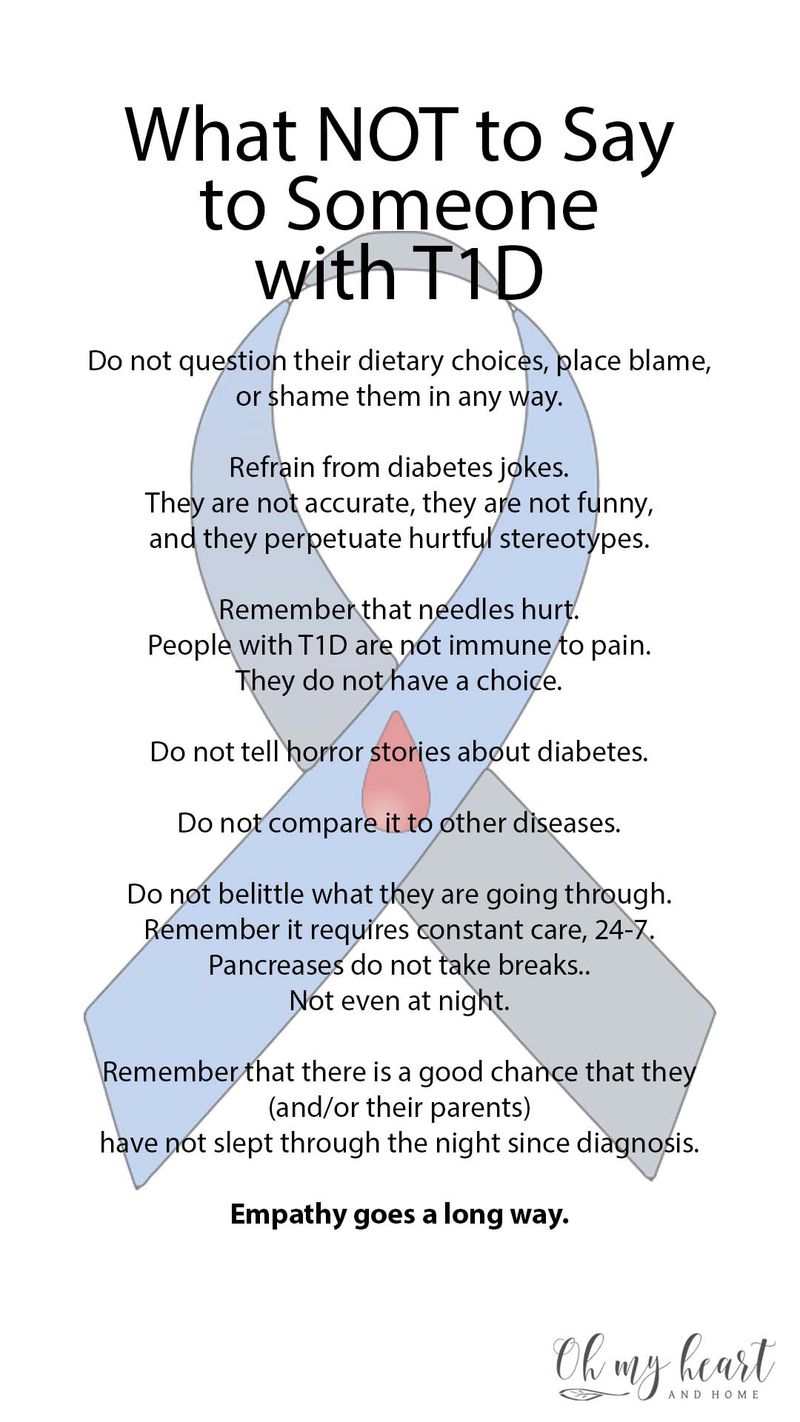
  • Do not question their dietary choices, place blame, or shame them in any way.
  • Refrain from diabetes jokes. They are not accurate. They are not funny, and they perpetuate hurtful stereotypes.
  • Remember that needles hurt. People with T1D are not immune to pain. They do not have a choice.
  • Do not tell horror stories about diabetes.
  • Do not compare it to other diseases.
  • Do not belittle the challenges they face. Remember it requires constant care, 24-7. Pancreases do not take breaks. Not even at night.
  • Remember that there is a good chance that they - and/or their parents - have not slept through the night since diagnosis.

Empathy goes a long way.

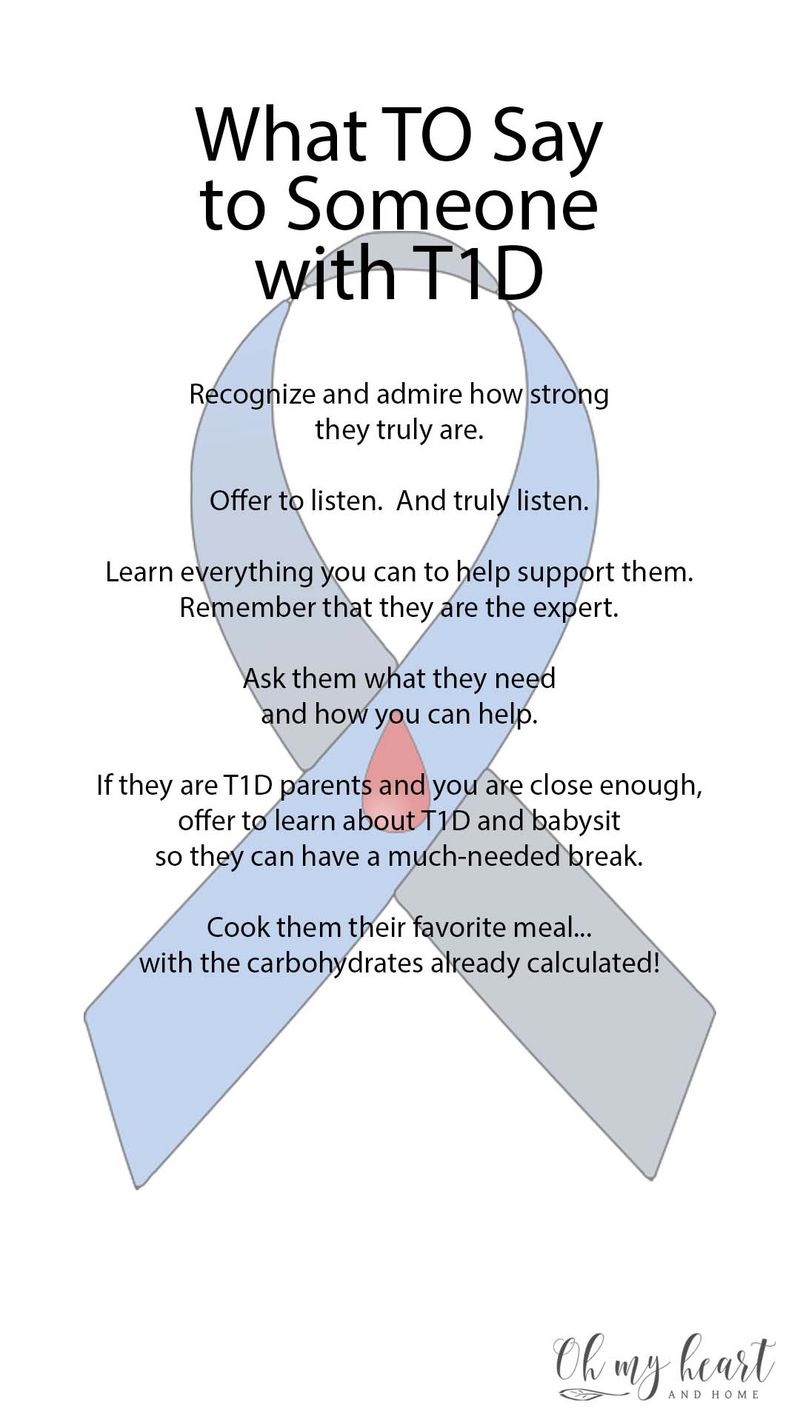
What TO say to Someone with T1D

  • Recognize and admire how strong they are.
  • Offer to listen. And truly listen.
  • Learn everything you can to help support them. Remember that they are the expert.
  • Ask them what they need and how you can help.
  • If they are T1D parents, offer to learn about T1D and babysit so they can have a much-needed break.
  • Cook them their favorite meal... with the carbohydrates already calculated!

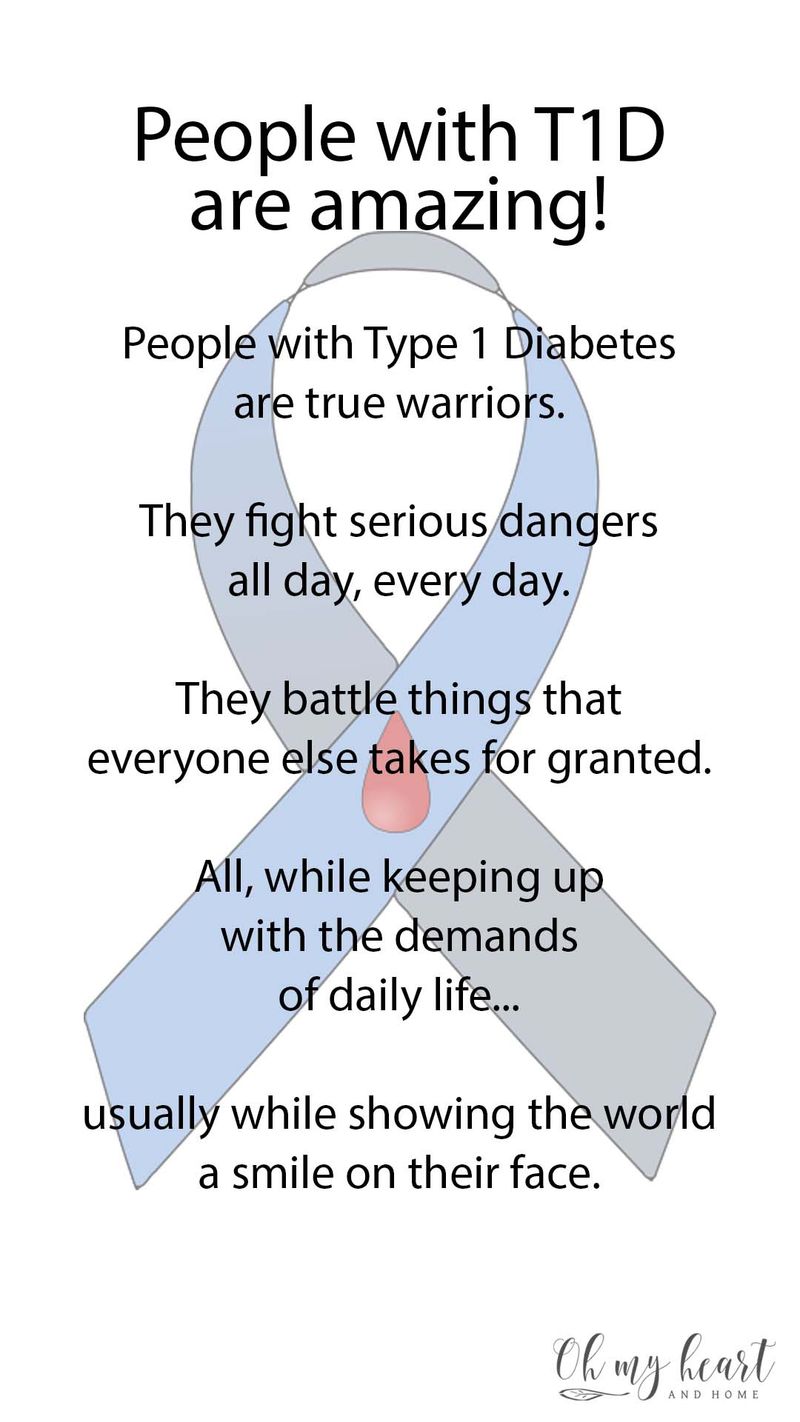
People with T1D are amazing!

People with Type 1 Diabetes are warriors.

They fight serious dangers all day, every day.

They battle things that most people take for granted.

All while keeping up with the demands of daily life.

People with T1D can live full and happy lives.

Children with T1D often grow to be extremely responsible and empathetic through the skills they gain by caring for their T1D.

To all the T1D’s out there...

Keep up the great work.

Your perseverance is an inspiration!

Your strength, courage, and resilience are admirable, and you should be incredibly proud of your efforts.

This page is for awareness and education, not medical advice. Talk with a doctor about symptoms, diagnosis or treatment. In an emergency, call 911. Learn more · Disclaimer

T1D Food

People with Type 1 Diabetes can eat the same foods as anyone else.

Knowing how many carbohydrates are in the food so that the proper amount of insulin can be dosed is critical.

This is the case no matter what is eaten... Cake or Salad.

With any food, it is important to monitor blood sugar and adjust as needed.

Some foods may take more work to maintain safe blood sugar levels than others. Modern technologies help make this possible.

Our nutrition calculator is designed by a T1D mom to help calculate carbohydrates. Tell it exactly how many grams of a recipe are being served, and it will calculate the full nutrition profile for that amount.

* Other medical conditions and personal choice may affect what a person with T1D eats.

** If you have T1D, always work with your endocrinologist to determine the best dietary plan for you.

Share the Awareness

It is important to share awareness about Type 1 Diabetes.

Just knowing could save a life.

Learn More

Type 1 diabetes awareness ribbon

Organizations We Support

By supporting Oh My Heart and Home you are helping to support the Type 1 Community. A portion of all proceeds go to benefit Breakthrough T1D and T1International. #insulin4all

Breakthrough T1D, formerly JDRFT1International

Logos are the property of their owners. Oh My Heart and Home is not affiliated with or endorsed by these organizations.

Join the Table

Subscribe for new recipes, each with complete nutrition, delivered to your inbox.

One email per new recipe. Unsubscribe anytime. We never sell your information. By subscribing, you agree to our Privacy Policy.